

The main benefits of anonymous Instagram story viewing are privacy (you never appear in the viewer list), freedom to research competitors or people without tipping them off, the ability to watch and save public content without an Instagram account, and zero risk to your own login. It works on public accounts in any browser, with no notification to the owner.
⚡ Key takeaways
- You stay out of the “seen by” list — no awkward signals of interest.
- Excellent for competitor and market research without revealing your brand.
- No account or login needed, so nothing ties the view back to you.
- Watch and save public content on your terms, with no trace for the owner.
- It’s for public content; use it discreetly and respectfully.
“Anonymous” can sound furtive, but in practice anonymous Instagram story viewing is mostly about everyday discretion — the same instinct that makes you browse a shop window without flagging down a salesperson. Below is an honest look at why so many people use it, from creators and marketers to the simply private, plus the line between using it well and using it badly.
1. Privacy — you’re never in the viewer list
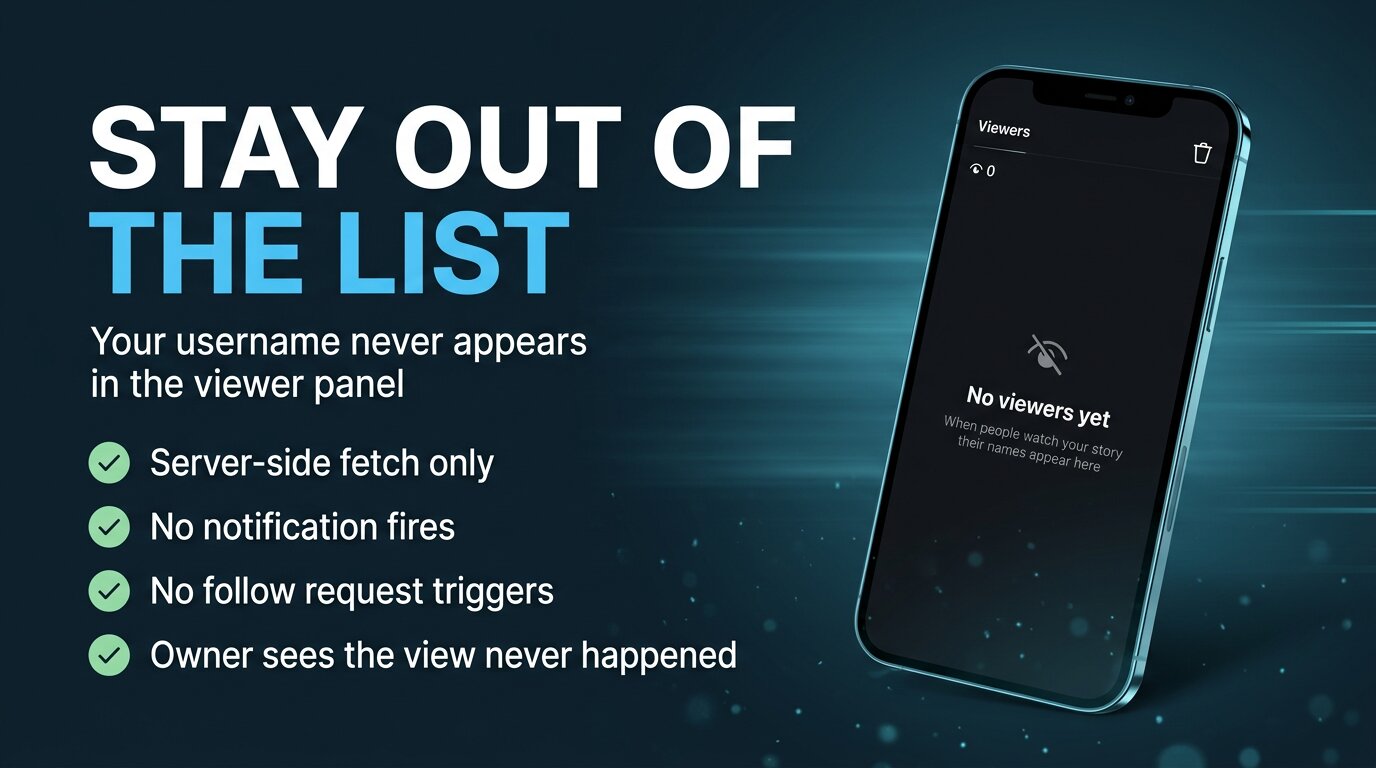
The single most asked-for benefit is plain: your username never shows up on the “Viewers” panel the account owner sees. When you watch through a story viewer, the request is fetched server-side, not from your Instagram session. The owner sees the same panel they always see, just with one fewer name on it — yours.
That matters more than people admit. Liking a post is a choice. Following someone is a choice. But watching a story used to be a silent action that quietly broadcast a signal of interest, attention, or even surveillance — and once that name was in the list, it stayed there for the next 24 hours, easily noticed during a casual swipe. Anonymous viewing turns that signal off entirely. You read the room without making your presence felt.
It is structural privacy, not a hack. The owner’s app does not record a view that the owner’s account never received. There is nothing to delete, nothing to undo, nothing to apologise for. The story plays for you privately because the loop between your eyes and their dashboard was never closed.
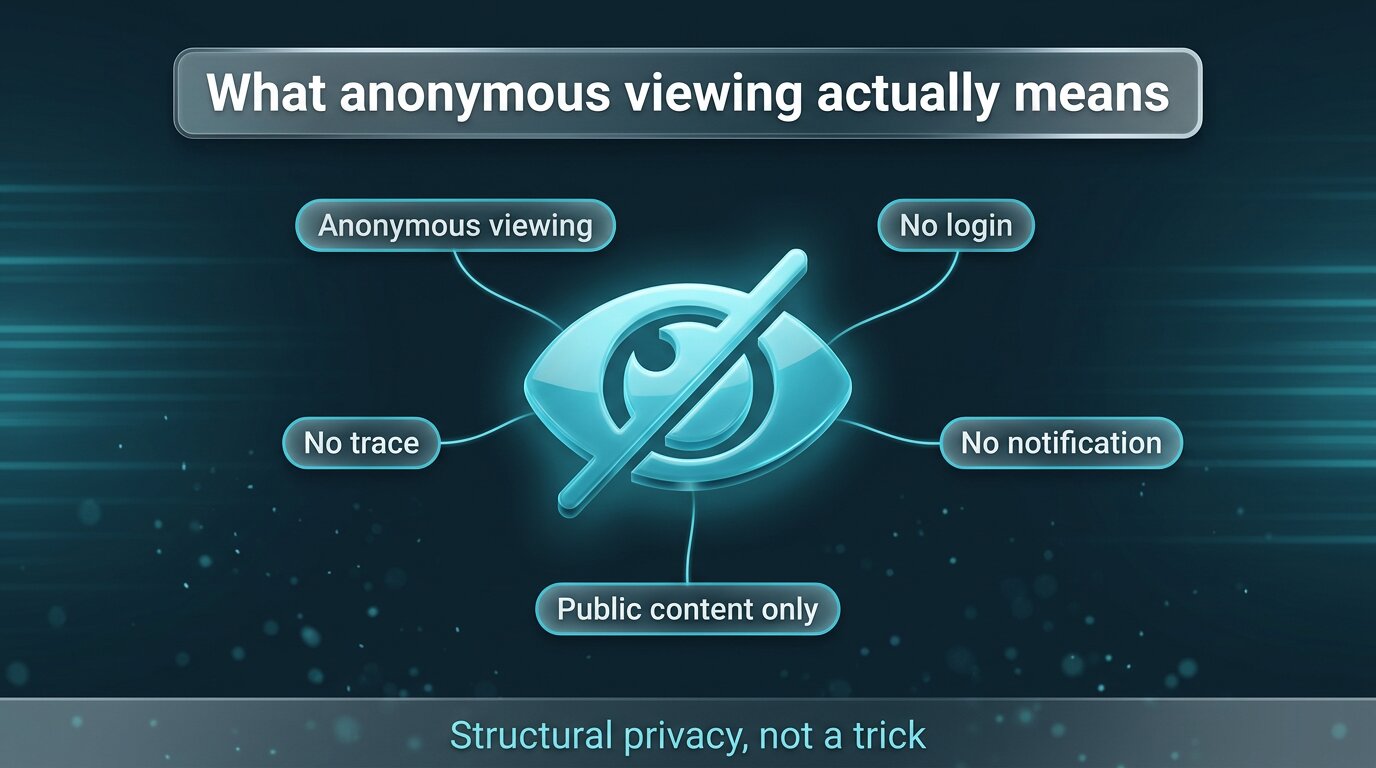
Common, very human reasons for wanting that:
- You broke up months ago but still want to know they’re okay.
- You’re vetting an ex-colleague before a job reference call.
- You’re checking on a competitor without alerting their team.
- You’re a journalist confirming a source’s public posture.
- You’re just curious and don’t want curiosity to look like a campaign.
None of those are dramatic. They’re ordinary daily life on a platform designed to amplify every micro-signal. Anonymous viewing simply puts the volume back where you would expect it on any other website — reading something does not announce you to its author.
2. Research without tipping your hand
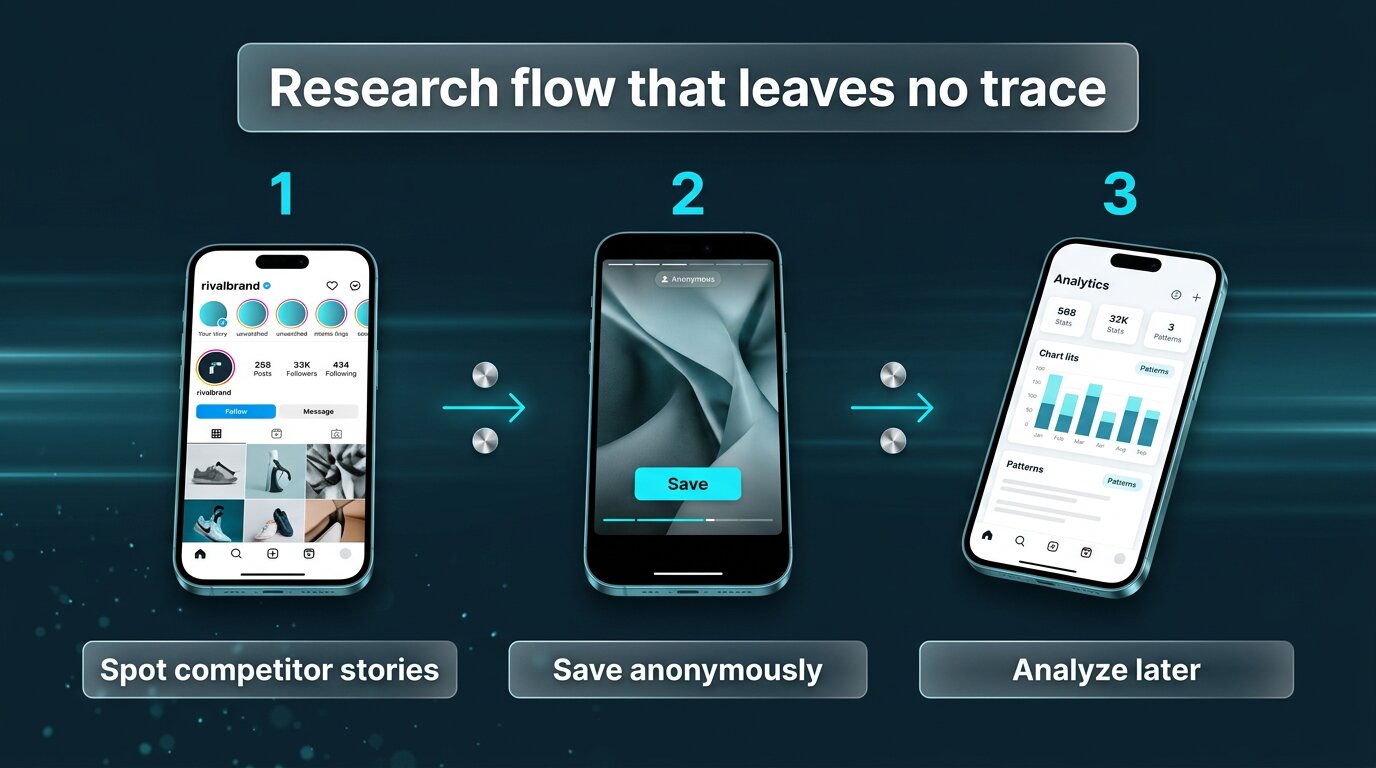
Marketers, brand managers, agency strategists, recruiters, journalists, even product managers spend hours a week watching what others are publishing. Anonymous viewing makes that work invisible. A competitor never sees your brand username appear on their high-stakes launch story. A target candidate never sees a curious view from a recruiter the morning of their interview. A journalist’s outlet name never tips off a source before publication.
Without anonymity, the alternative is a maze of dummy accounts — create one, warm it up, hope it does not get banned, remember to log out before posting from your real one. That works, until someone screenshots and reverse-searches the avatar. Anonymous viewing skips the whole mess.
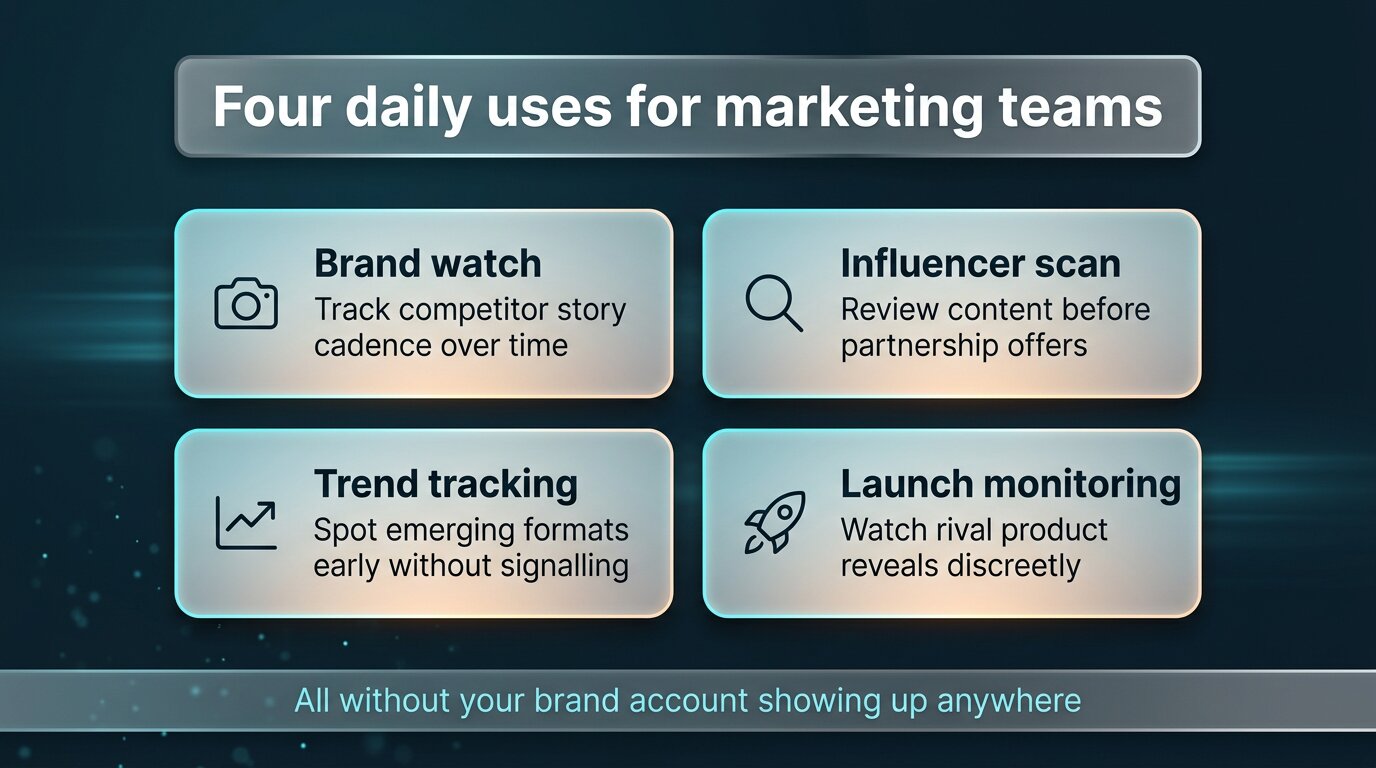
Typical research patterns it enables:
- Brand watch. Track competitor story cadence over weeks. Do they post daily? Only on launch days? In bursts before a campaign?
- Influencer scan. Review a creator’s last week of stories before sending a partnership offer — without their managers spotting your handle.
- Trend tracking. Watch what aesthetic, format or pacing is winning in your niche right now, without signalling that you’re studying it.
- Launch monitoring. When a rival reveals a product, watch every story in their teaser sequence and save the strongest frames for the team review later.
The strategic point is not subterfuge — it’s that research should not also be a signal. When your competitor opens their Viewers panel and sees your senior brand manager’s name on every story, they learn things about you they should not have learned. Anonymous viewing keeps the boundary clean.
3. No Instagram account needed
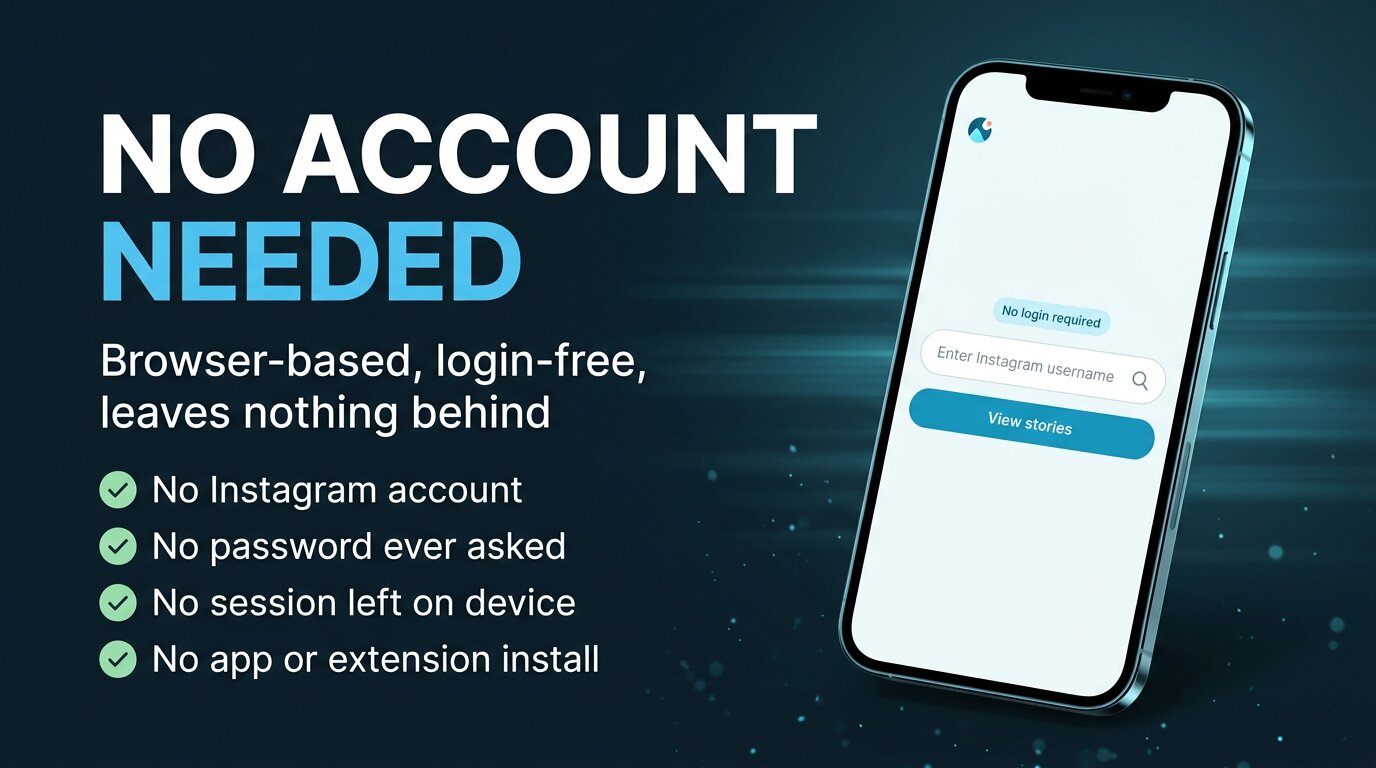
You don’t need an Instagram account at all. No sign-up, no password, no app install, no profile, no recovery email. You open a webpage in any modern browser, type the username, and the public stories appear. That alone is enough reason for many people to switch — not everyone wants another social account, another notification stream, another set of credentials, another inbox to maintain.
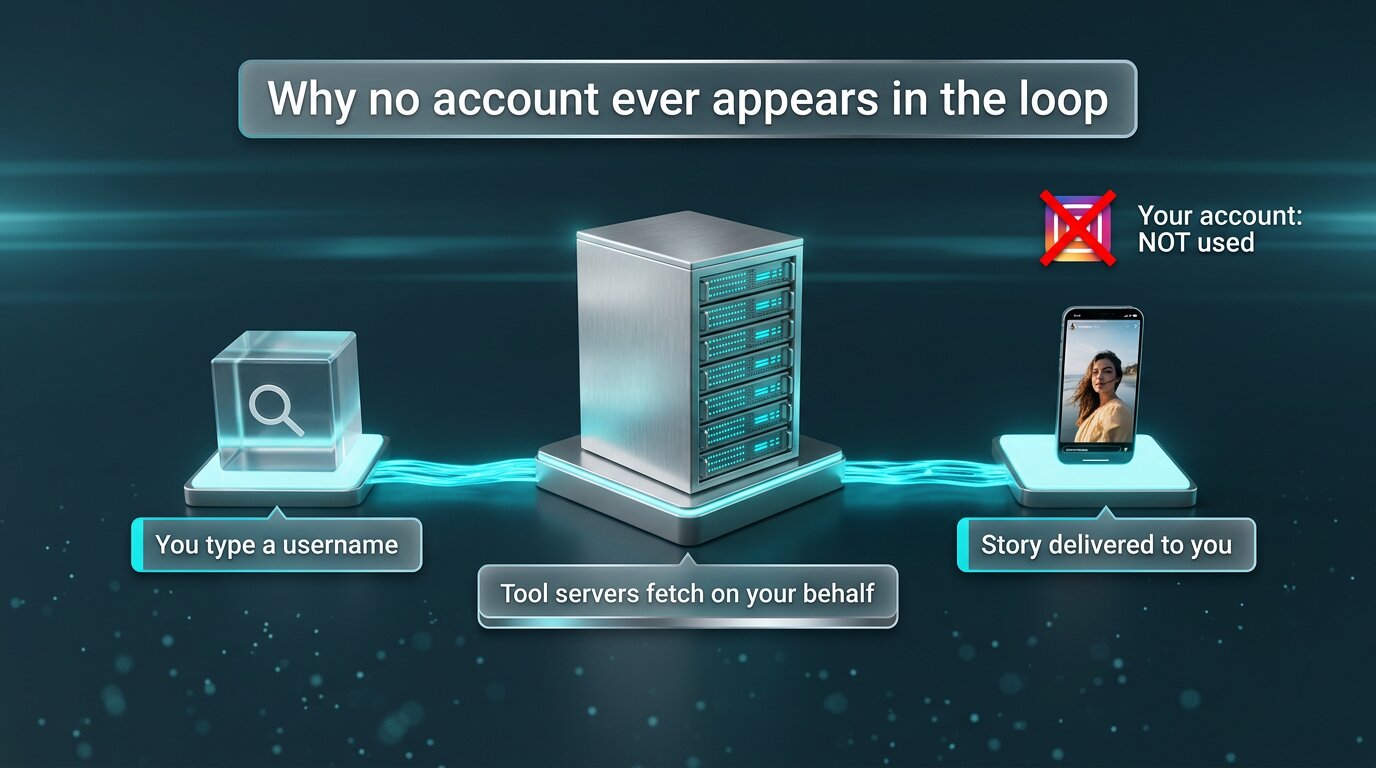
The mechanics underneath are simple. You type a username. The tool server queries Instagram’s public endpoints on your behalf, the same endpoints any web browser would hit when you load a public profile. The server pulls the public story media. The server hands it to your browser. Your account, your password, your session: none of those exist in this path.
Practically speaking, that means:
- It works on a chromebook, a borrowed laptop, a library computer, a phone, a tablet — anywhere a browser runs.
- You never get the “please log in to continue” wall halfway through a session.
- There is no two-factor prompt going to a phone you no longer have access to.
- You don’t risk your real account’s safety against any third-party tool.
- A bug or service shutdown does not lose “your data” — you never gave any.
This is genuinely useful for people who deleted Instagram years ago and still occasionally need to look at someone’s public story — a wedding, an event, a local business they’re considering. They can do it without crawling back to a platform they consciously left.
4. Watch and keep, on your terms
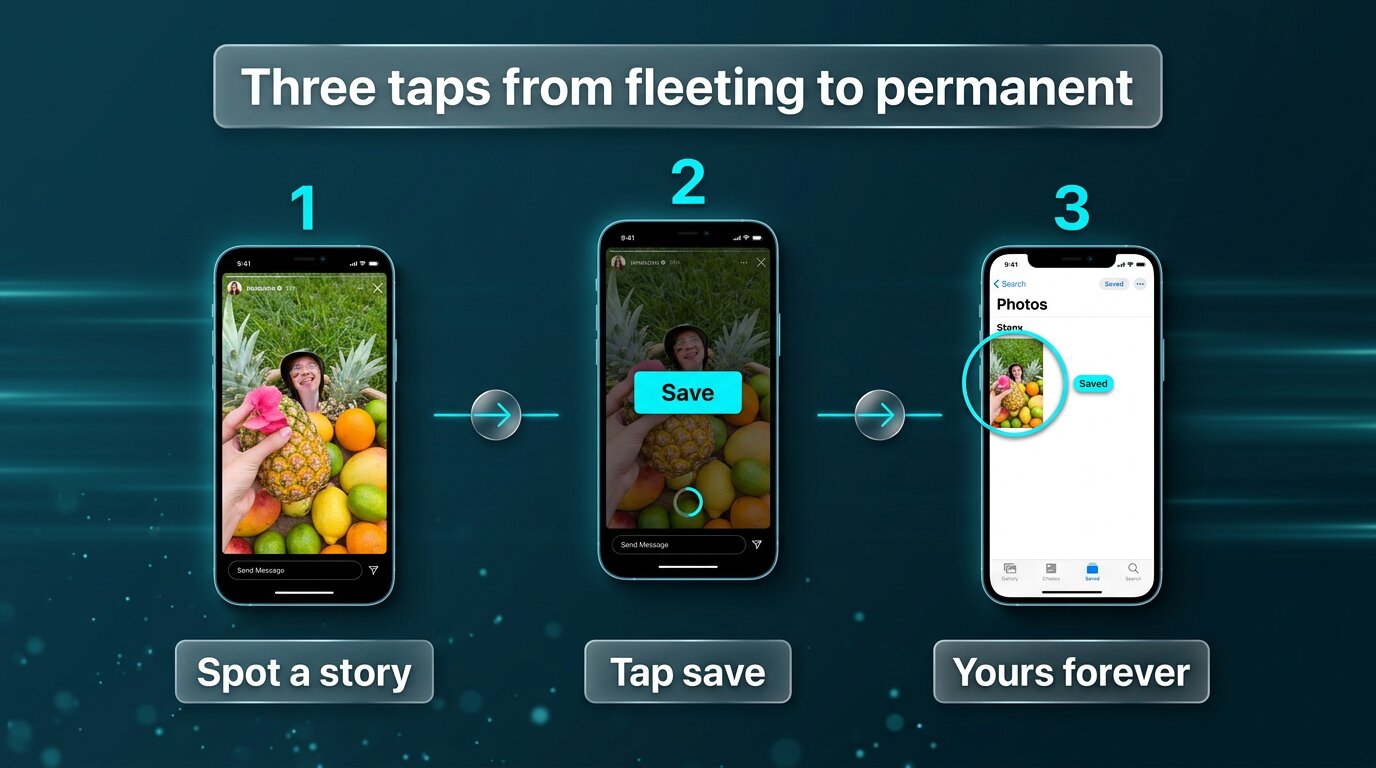
Stories are designed to disappear. That’s the platform’s feature, not yours. Anonymous viewers usually pair viewing with download in original quality, which converts a 24-hour broadcast into a permanent file you control. Once saved, the clock no longer matters; the original owner can delete, archive or rotate the story all they like.
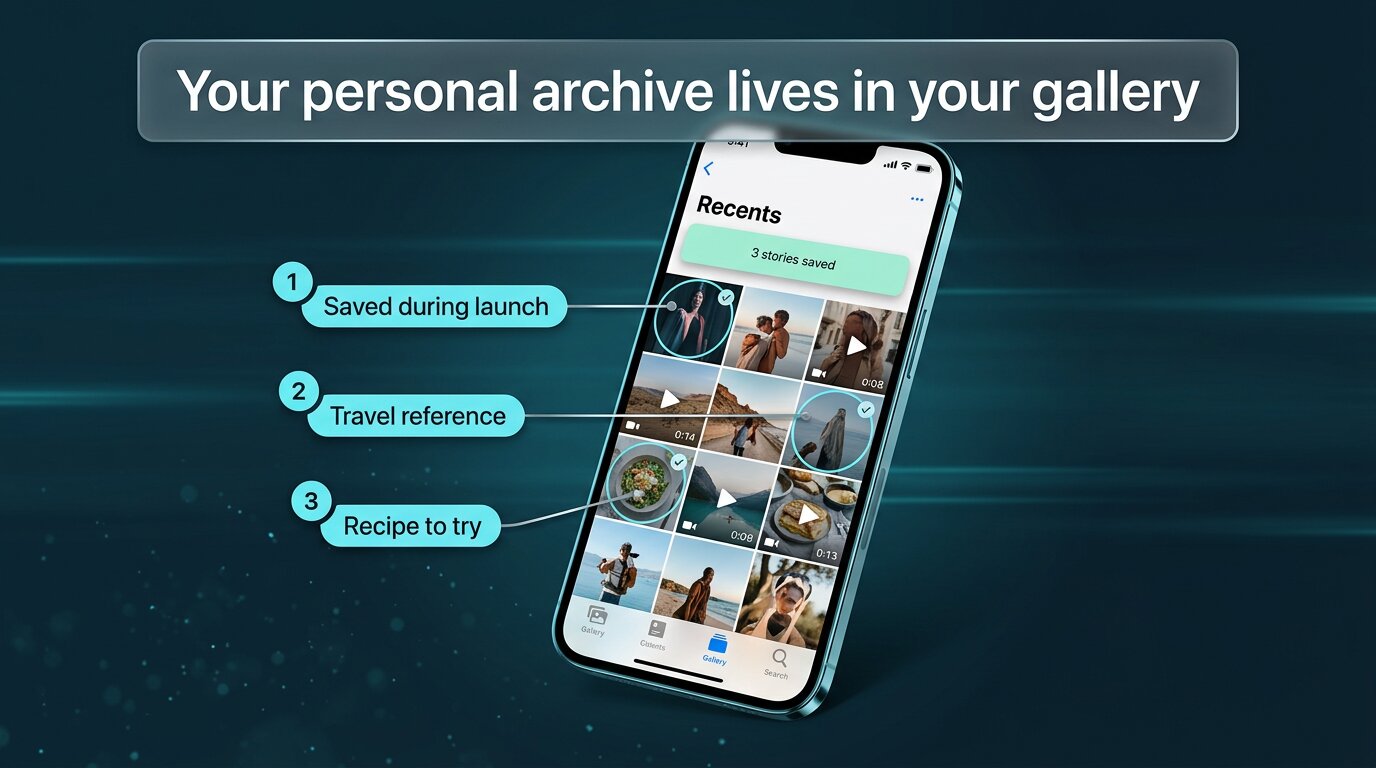
What people actually do with that capability is interesting — far broader than “collecting”:
- A travel writer saves every story a destination tags this month for a research moodboard.
- A recipe creator saves rival chefs’ cooking demos to study technique slowly, frame by frame.
- A small business owner saves every story their suppliers post about new stock arrivals.
- A parent saves a teacher’s classroom updates so they can re-watch what their child missed at school.
- A community manager saves every member’s celebration story to compile a quarterly highlights reel.
The common thread is that stories carry meaningful information — sometimes more than feed posts. Important moments, dated context, raw working-version content, behind-the-scenes process. Letting it vanish at 24 hours throws all of that away. A save makes it referenceable.
5. Creators and marketers love it
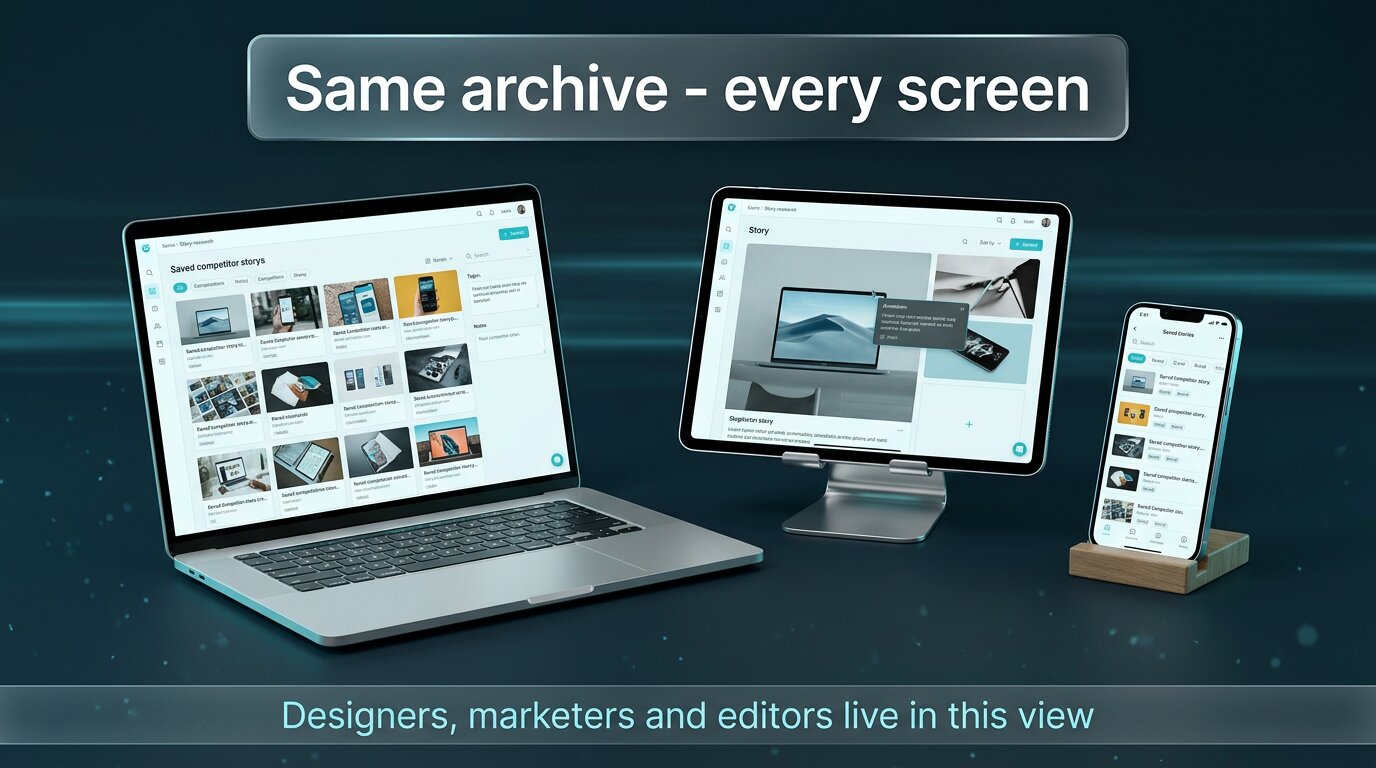
Anonymous viewers have become a quiet workhorse inside creator and marketing teams. The list of professions that touch one in a normal week is long: designers, social media managers, brand strategists, art directors, video editors, content planners, ad teams, junior creatives doing competitive sweeps. All of them need to watch what others are doing without the social act of being seen watching it.
Three patterns dominate inside agencies and brand teams:
- The moodboard pull. Every Monday a junior creative does a sweep of fifteen relevant accounts, saves the strongest stories of the week, and drops them into a shared deck for the brief.
- The launch monitor. When a competitor announces, the team watches their teaser run live, saves each story, and compares frame-by-frame against the brief they themselves are working on.
- The influencer vet. Before sending a paid partnership offer, someone reviews the influencer’s last fortnight of stories — the unfiltered version of their account, not the curated grid — without the influencer’s team spotting the brand name in their viewers list.
None of these are sinister — they’re the boring substance of doing good creative work. The benefit is that doing the work doesn’t accidentally become a public signal about your strategy. Your competitor doesn’t learn what you’re thinking about every Monday morning.
6. Browse in public without awkwardness
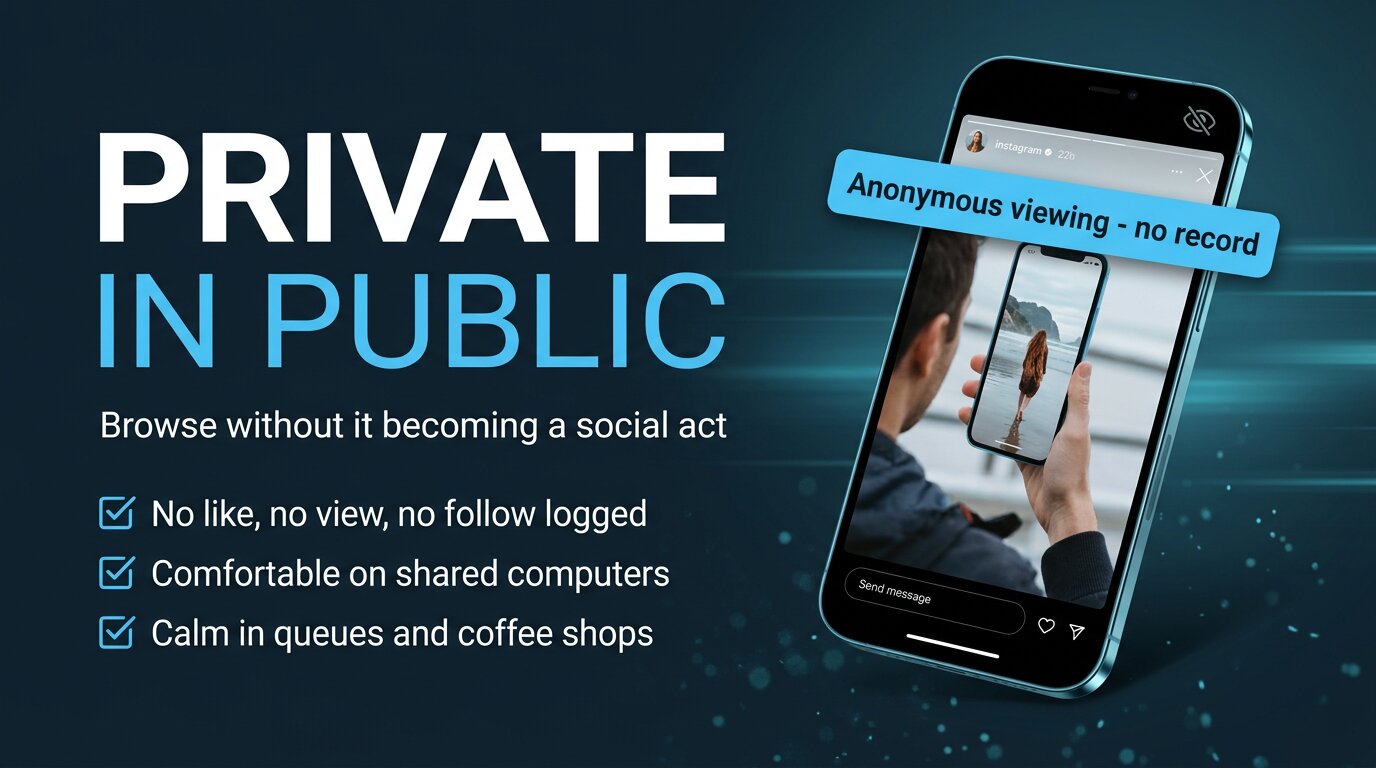
There’s a quieter, more everyday benefit: browsing in public without it becoming a social act. On a borrowed laptop, in a coffee shop, in a long airport queue, on a shared family computer, in a school library — many situations where you genuinely just want to check what someone posted today, without leaving a logged-in Instagram session on a machine that isn’t yours and without your view registering as a like-adjacent gesture.
The same logic covers situations where you don’t want a particular check to surface as a notification on a partner’s phone, a teammate’s phone, or a family member’s phone you happen to share an account with. A view from a personal account becomes part of the household’s log of who watched what. Anonymous viewing keeps that log empty for the things that don’t need to be in it.
It’s also kinder to your own attention. There’s no app open, no algorithm-tuned feed, no recommendations chasing your last tap. You see the one specific thing you came to see, then you close the tab. No 40-minute scroll detour.
Using it responsibly
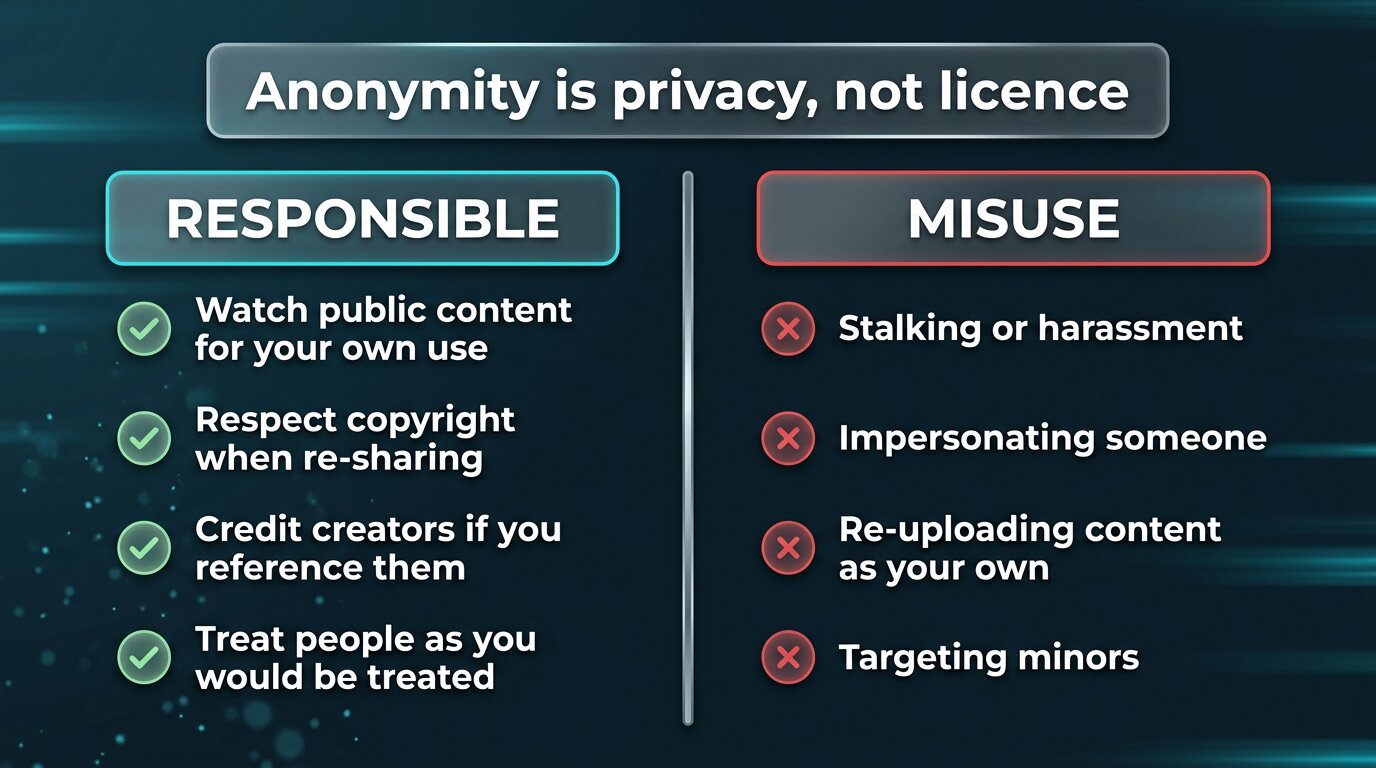
Anonymity makes some things easier; that includes a small number of things that should be harder. Use anonymous viewing the way you’d use any privacy-protecting tool: for your own genuine purposes, respectful of the person posting.
The responsible boundaries:
- Watch public content for your own use — reading, research, curiosity.
- If you re-share a story you saved, treat it the way you’d treat any quoted source — credit the creator, link to the profile.
- Respect copyright. Saving a story for personal viewing is not the same as re-uploading it as your own.
- Don’t treat anonymity as cover for behaviour you would feel ashamed of if your name were attached.
The misuses to avoid are the obvious ones — stalking, harassment, impersonation, anything involving minors, anything that crosses from observation into intrusion. Anonymity is privacy, not licence. If you would not do it under your own name, the absence of a name does not change whether you should do it.
The boundary: public content only
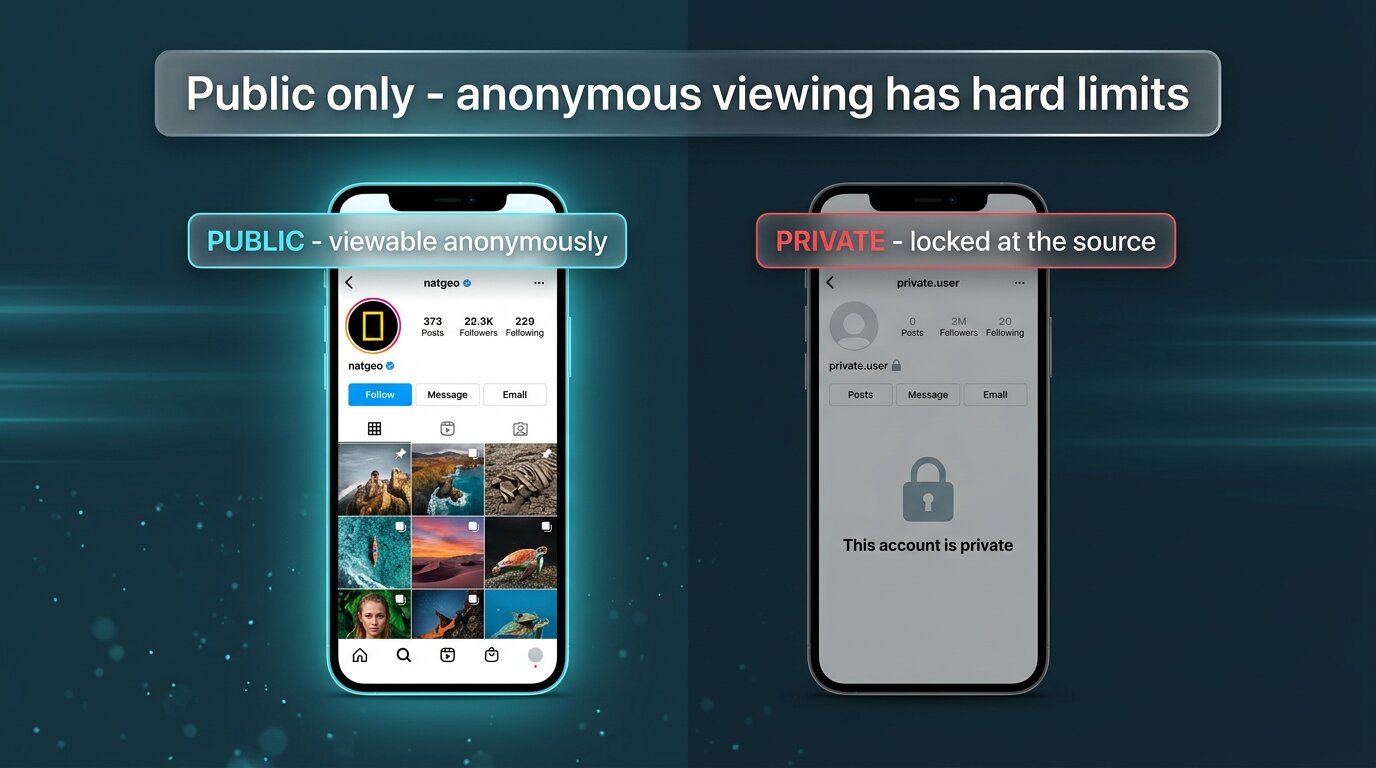
Anonymous viewers only work on public Instagram accounts. Private accounts — the ones with the small padlock icon next to the username — are locked at the source. Instagram’s server simply refuses to release that media to anyone who is not on the owner’s approved follower list. No third-party tool, anonymous or otherwise, gets around that.
This is the correct design and the honest line every reputable tool draws. If a service promises to view private accounts, it’s either lying, asking for your password (which is then stolen), serving fake content, or routing you through ad-fraud surveys. The reliable rule: anonymous viewing extends what you can do with the public web, not what you can do with private content. If someone has chosen to keep their account closed, the right move is to ask for the follow.
The bottom line
The headline benefit of anonymous Instagram story viewing is simple: you get to be a reader instead of a signal. You can watch, research, save, learn, vet and observe public content without your username being part of the transaction.
That covers the simply private viewer who doesn’t want to advertise their interest in someone they once dated; the marketer who can’t hand their brand name to a competitor every Monday; the journalist who can’t tip off a source; the creator who saves competitive references for a Friday review; the parent who quietly checks on a teacher’s classroom updates; the person who deleted Instagram years ago and just needs to see one specific story today. None of those people were doing anything they should have to defend. Anonymous viewing simply lets them act normally.
Used on public content, with respect for the people on the other side, it’s one of the cleaner privacy wins on the modern internet.
Further reading: Instagram’s official documentation on how stories work — Instagram Help Center: Stories.
Explore more across GWAA: View highlights anonymously · View profiles anonymously


